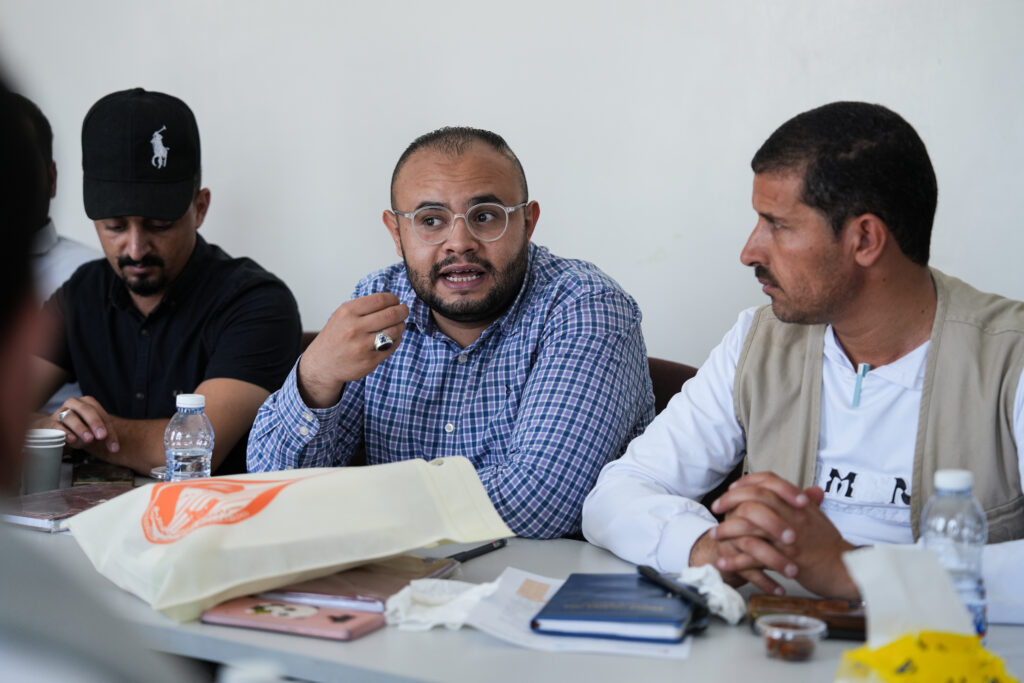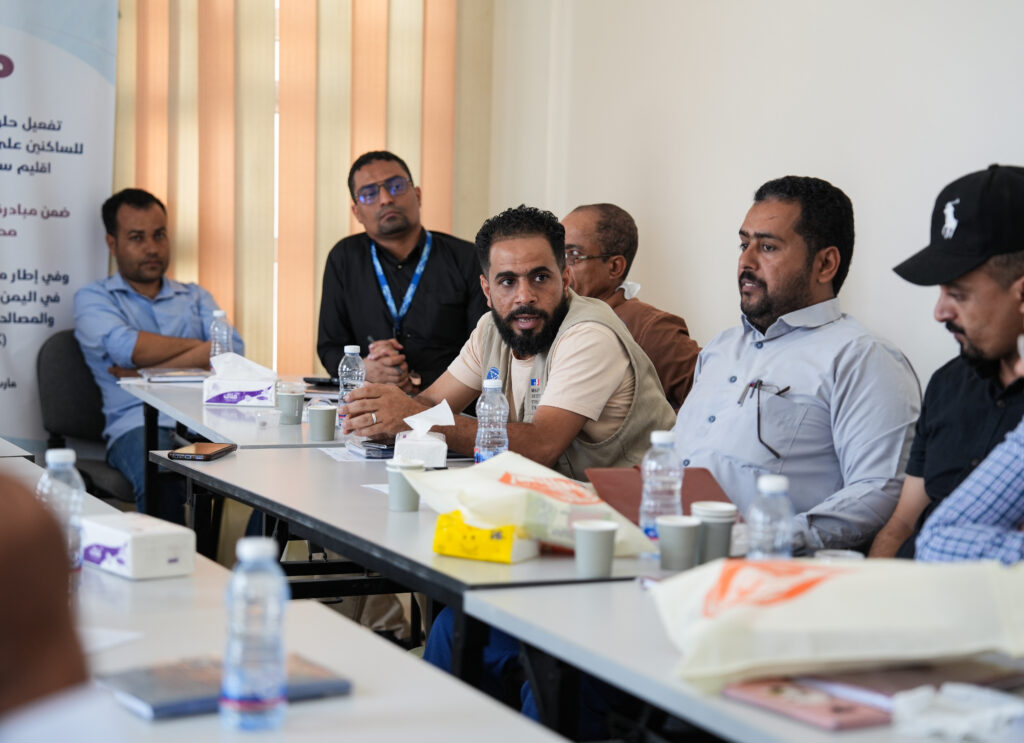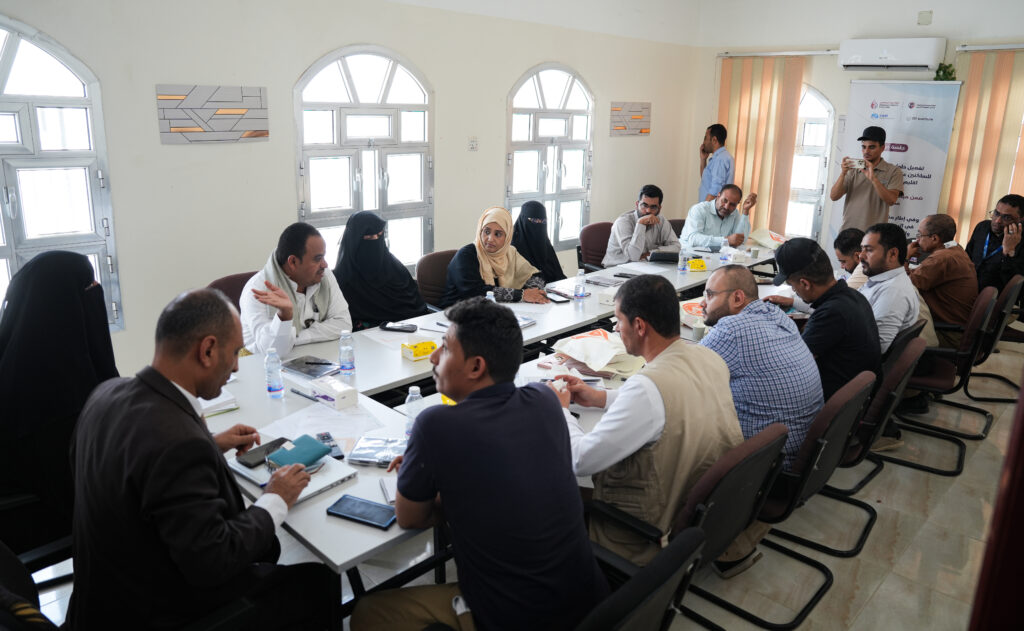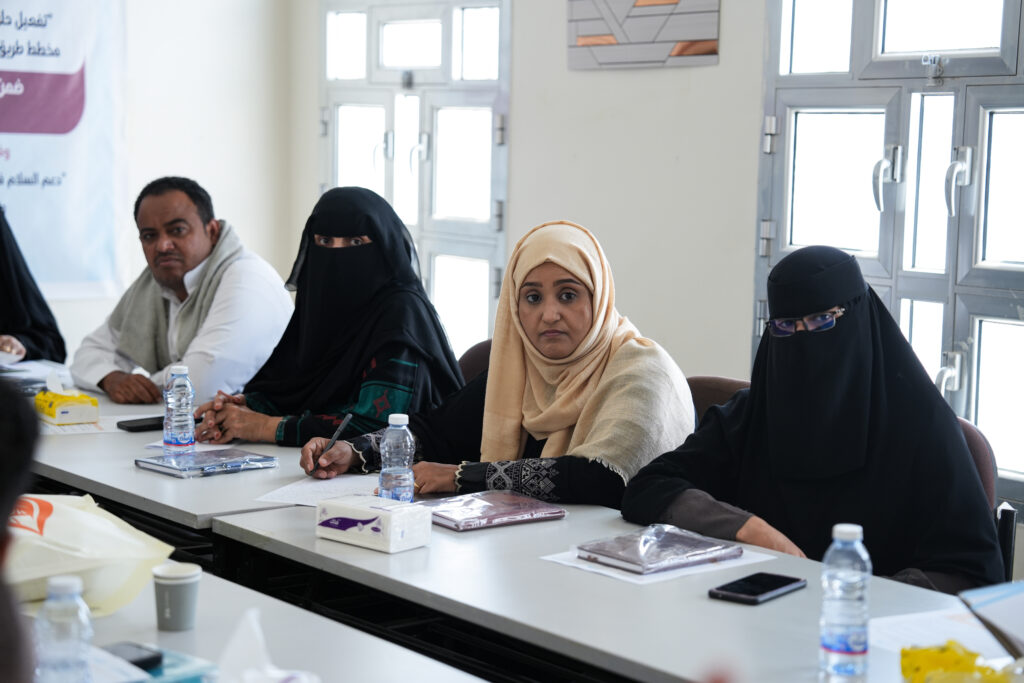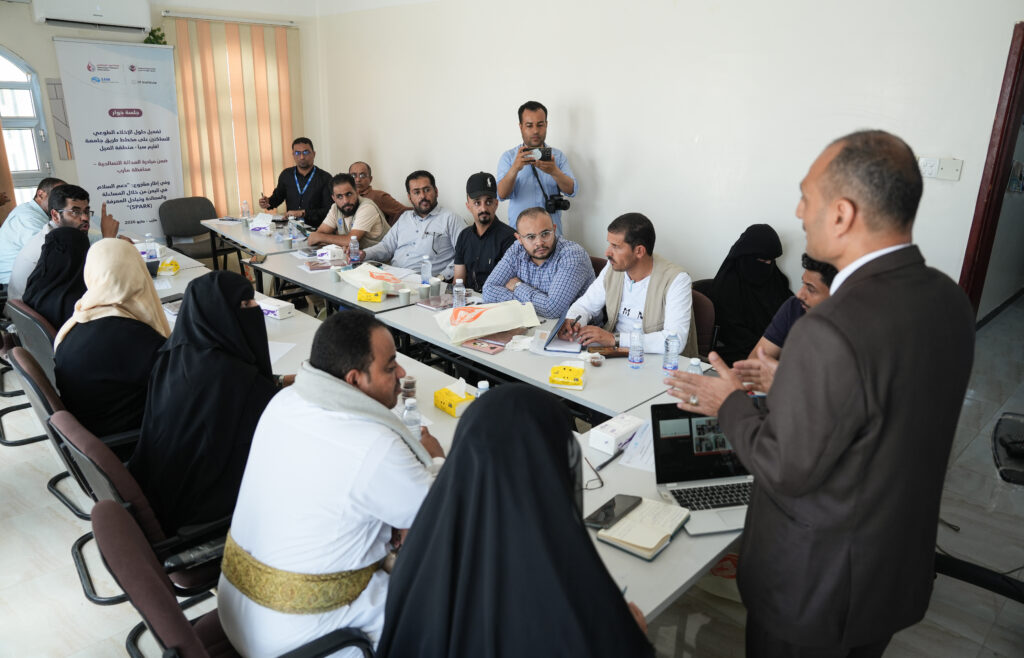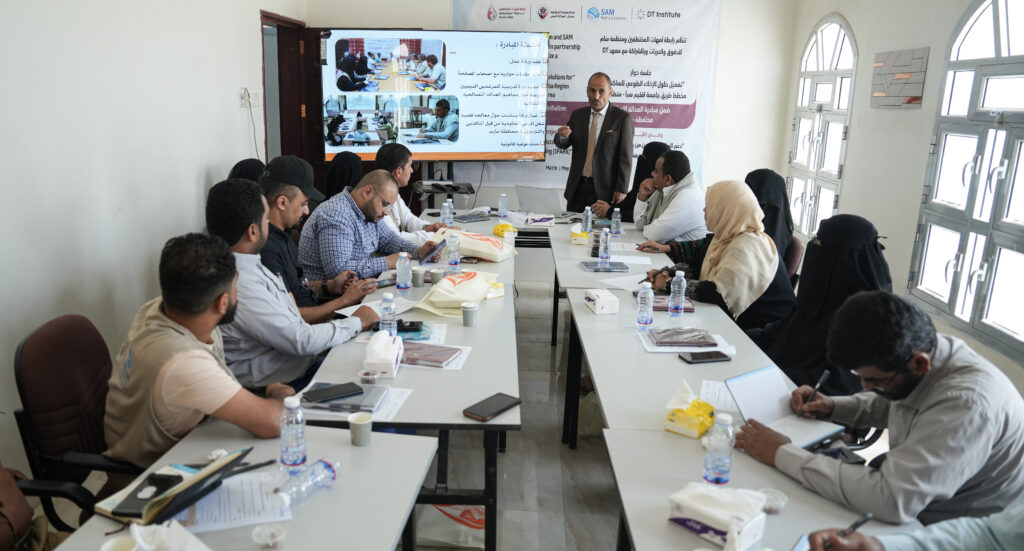

The Abductees’ Mothers Association, in partnership with SAM for Rights and Liberties and with support from the DT Institute, held a dialogue session titled “Activating Voluntary Evacuation Solutions for Residents Located on the Sab’a Region University Road Plan in the Mail Area,” as part of a restorative justice initiative aimed at finding sustainable solutions for displaced families residing in government buildings. The session was conducted within the framework of the “Supporting Peace in Yemen through Accountability, Reconciliation, and Knowledge Sharing (SPARK)” project.
The session builds on a series of previous discussions held along the same track, which contributed to tangible practical outcomes, most notably the evacuation of a local health center and the restoration of its services to the community, reflecting the effectiveness of a dialogue- and consensus-based approach.
The current session aimed to discuss mechanisms for activating the voluntary evacuation of the targeted site and to review agreed-upon solutions that promote community reconciliation while ensuring sustainable humanitarian responses that consider the needs of all parties and preserve the dignity and stability of displaced families. The session was attended by representatives of humanitarian organizations, the Executive Unit for the Management of IDP Camps, ACTED, and other relevant stakeholders. Discussions focused on the key challenges related to residents in the area and ways to reach practical solutions that balance urban planning requirements with humanitarian considerations.
Participants emphasized the importance of strengthening coordination between government authorities and humanitarian organizations, as well as expanding partnerships in implementing solutions to ensure realistic, dialogue-based approaches that help alleviate suffering and serve the public interest.
The session concluded with several recommendations, most notably enhancing joint efforts to support the voluntary evacuation process, activating the role of humanitarian clusters and relevant authorities, and preparing practical studies and plans to provide suitable housing and shelter alternatives that protect the rights of displaced persons and take their humanitarian conditions into account.
At the end of the session, a Charter for Strengthening Social Peace and Restoring Public Facilities was signed within the framework of restorative justice (accountability and reconciliation) in Ma’rib, reaffirming the commitment to continued joint efforts to promote local peace and establish sustainable, community-based solutions.