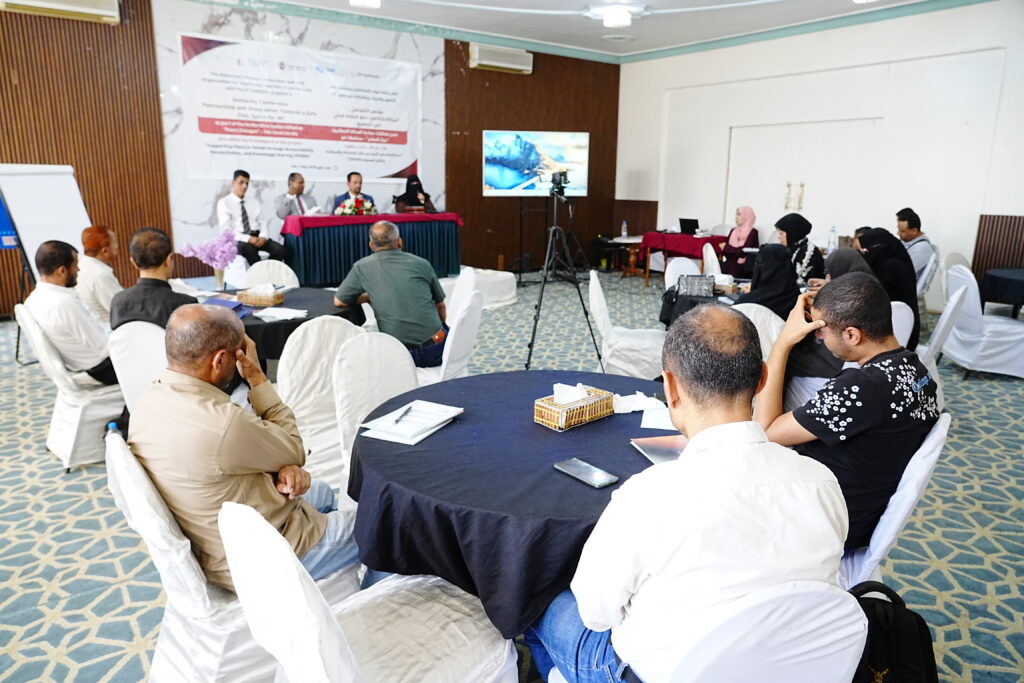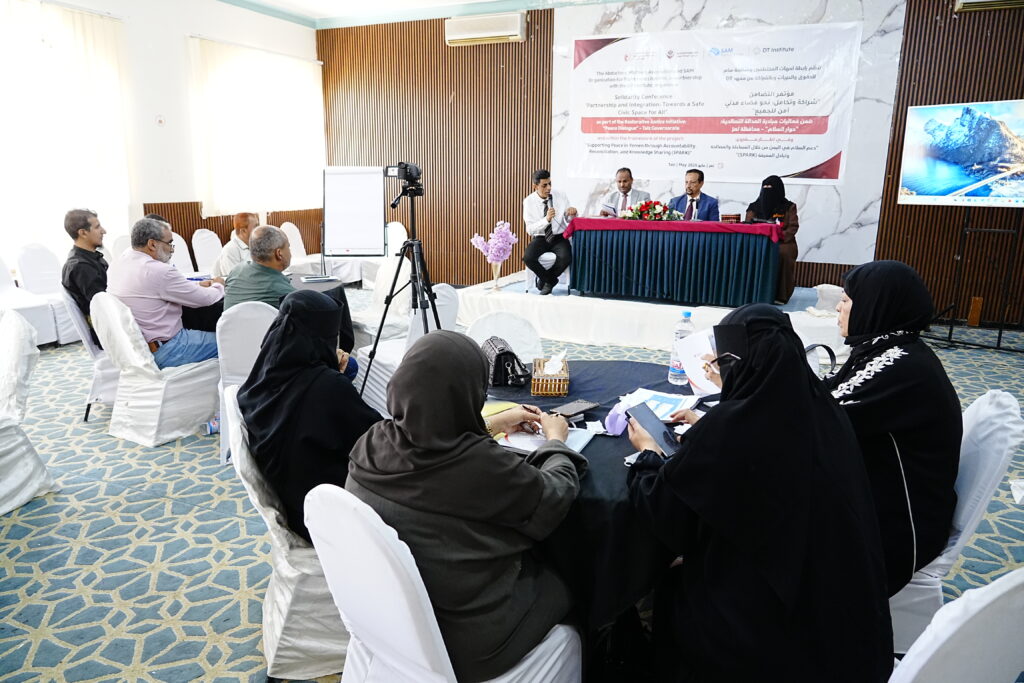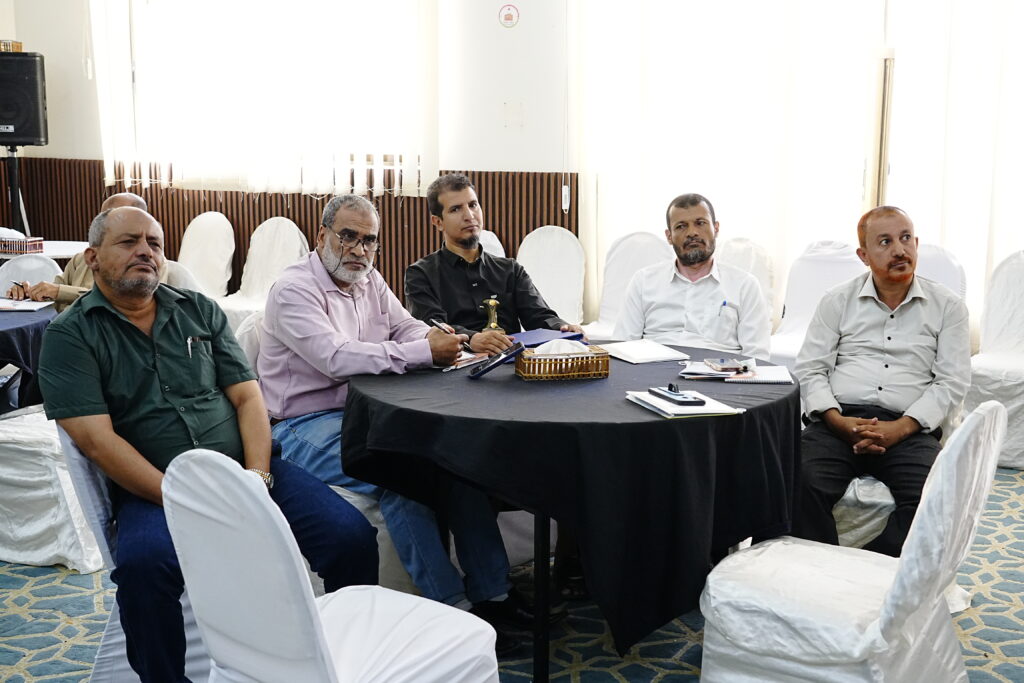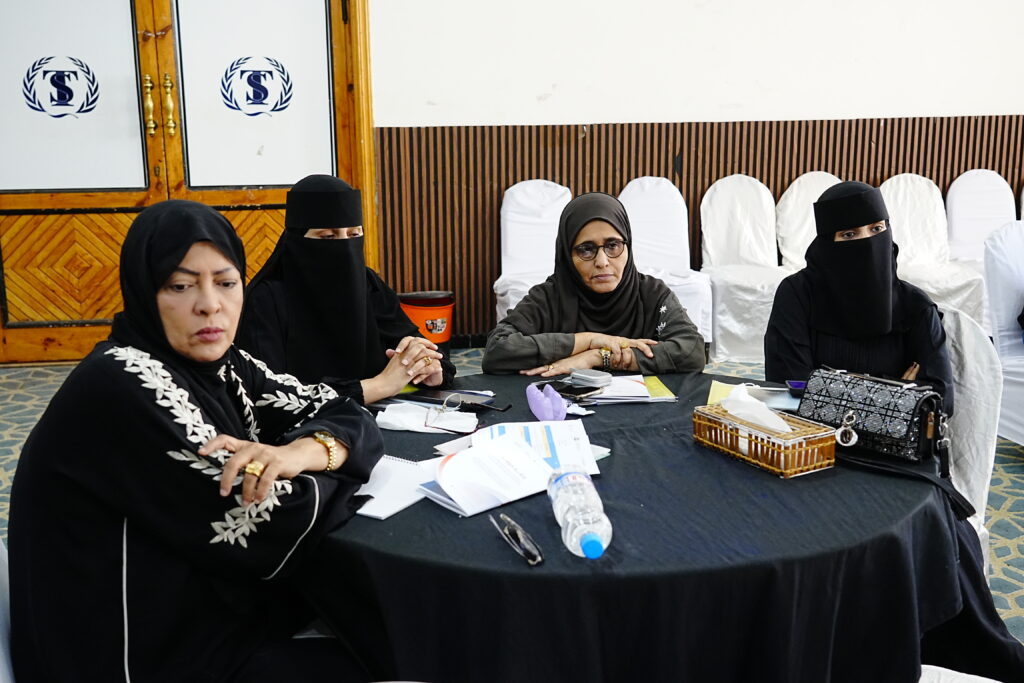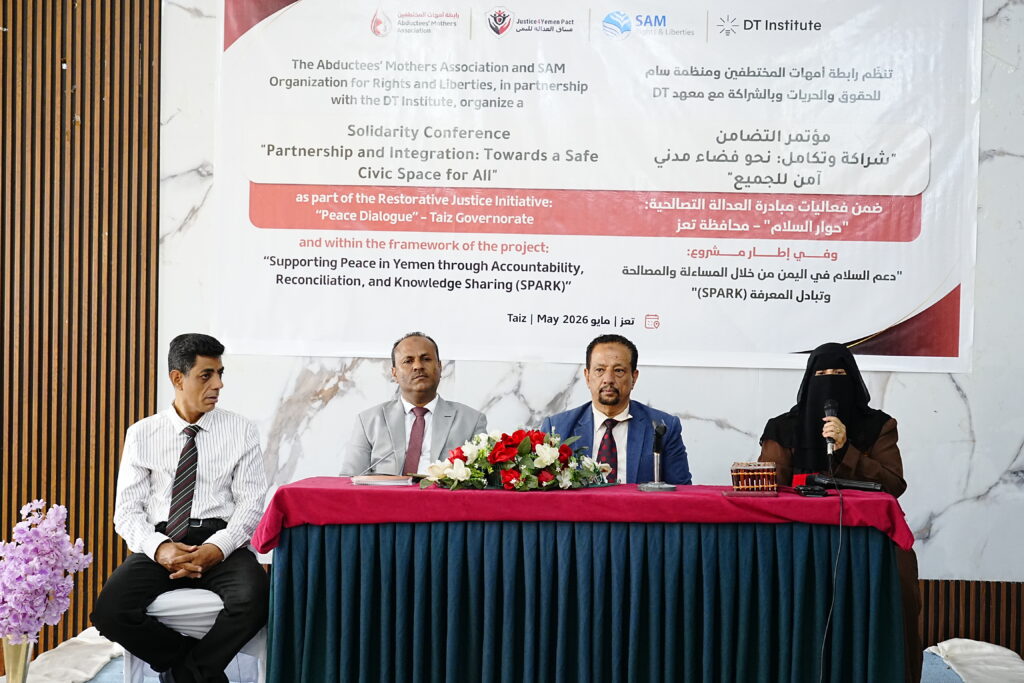
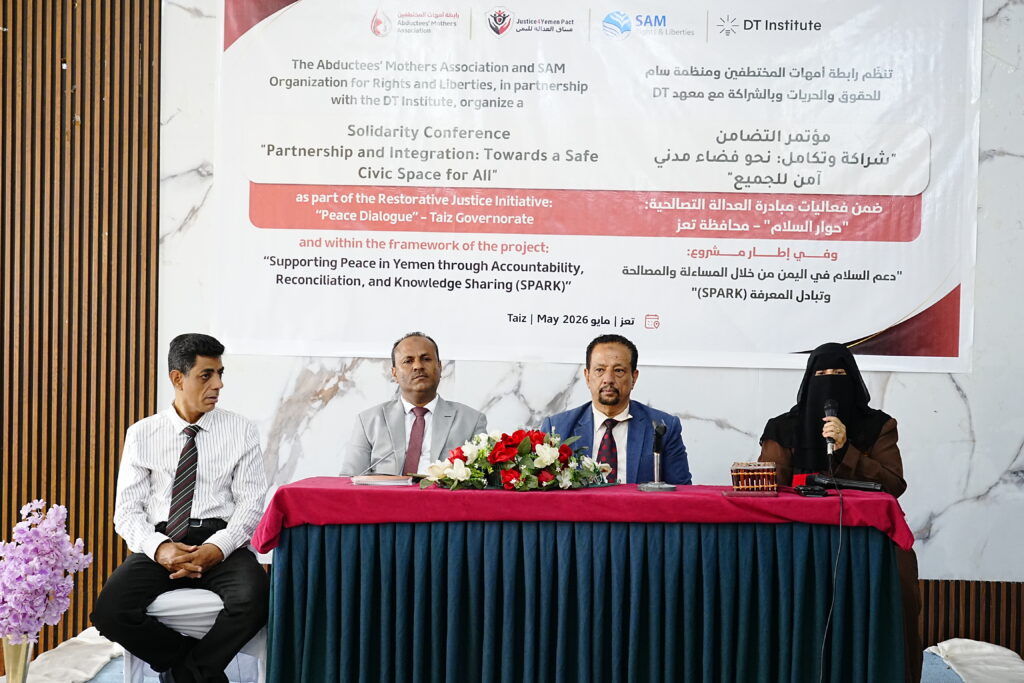
The city of Taiz hosted a solidarity conference titled “Partnership and Integration: Toward a Safe Civic Space for All” as part of the “Peace Dialogue” initiative on restorative justice. The event was organized by the Abductees’ Mothers Association in partnership with SAM Organization for Rights and Liberties and funded by the DT Institute. The conference brought together women activists, human rights advocates, religious speakers, academics, and representatives of civil society and local authorities.
The conference was held within the framework of the “Supporting Peace in Yemen through Accountability, Reconciliation, and Knowledge Sharing (SPARK)” project, with the aim of opening a community dialogue on the challenges facing civic space, promoting approaches to dialogue and restorative justice, and strengthening community trust. Particular focus was placed on protecting women working in civic and public spaces from smear campaigns, incitement, and digital targeting.
The conference program included an opening session featuring remarks from local authorities and the project management team at the Abductees’ Mothers Association, as well as the presentation of a position paper addressing the challenges faced by women in civic space. Additional sessions and roundtable discussions focused on mechanisms for implementing community commitments and promoting peace-oriented discourse. The event concluded with the reading, discussion, and signing of a document outlining community commitments.
During the sessions, organizers reviewed the trajectory of the initiative, which included field research and community dialogues across several Yemeni governorates, in addition to local initiatives related to restorative justice and community coexistence. They emphasized that the conference represented the concluding stage of a broader dialogue process aimed at strengthening understanding among social, religious, and civil actors.
Discussions focused on the growing smear and incitement campaigns targeting women working in civil society, particularly through digital spaces and social media platforms. Participants highlighted the resulting social, psychological, and professional impacts on women and their families, and the broader consequences for civic participation, humanitarian work, and women’s role in peacebuilding. Participants also stressed the need for a safer environment that preserves human dignity and supports social cohesion.
Speakers affirmed that addressing these issues requires a balanced approach that takes into account Yemen’s social context and cultural particularities, while being grounded in the values of justice, dignity, and the protection of personal honor. They emphasized the importance of avoiding polarizing and accusatory rhetoric and instead fostering community partnerships that promote dialogue and reduce hatred and division.
The conference also featured legal and religious observations regarding the position paper, focusing on the importance of framing concepts in more precise legal and socially grounded language, strengthening constitutional and religious references concerning protection and rights, and calling for the development of legislation addressing cybercrime and digital extortion, alongside activating legal protection mechanisms for victims.
Participants stressed that the discussions were not directed against any specific group, but rather sought to create a safe space for community dialogue and to affirm that protecting women and civil society actors from defamation and targeting is part of protecting the social fabric and civil peace, particularly amid the country’s complex conditions.
Participants were divided into working groups that discussed several themes, including legal and media protection, social and cultural protection, proposals for legislative reform, strengthening the role of the media and moderate religious discourse, and developing public awareness campaigns aimed at reducing hate speech and incitement.
The working groups issued several recommendations, most notably calling for the development of legal frameworks addressing cybercrimes, strengthening monitoring and documentation mechanisms, activating the role of educational, media, and religious institutions in promoting a culture of coexistence, and encouraging community initiatives that foster dialogue, mutual respect, and protection against targeting based on gender or professional affiliation.
Conference organizers affirmed that the initiative forms part of broader efforts to promote restorative justice and community peacebuilding in Yemen by encouraging dialogue among different social groups and creating safe spaces for discussing sensitive societal issues.