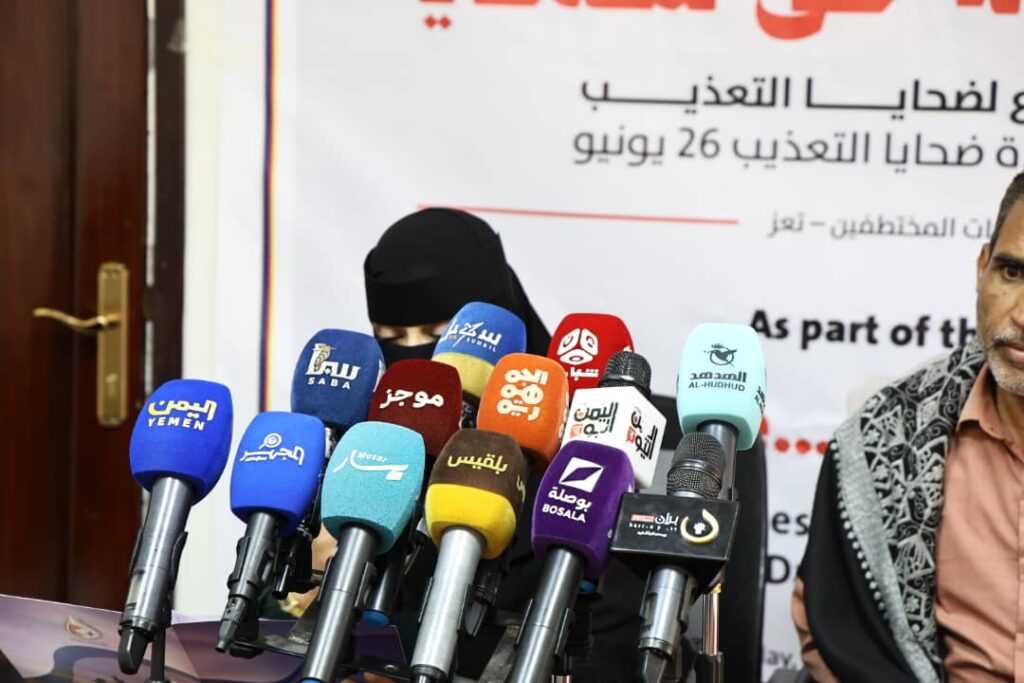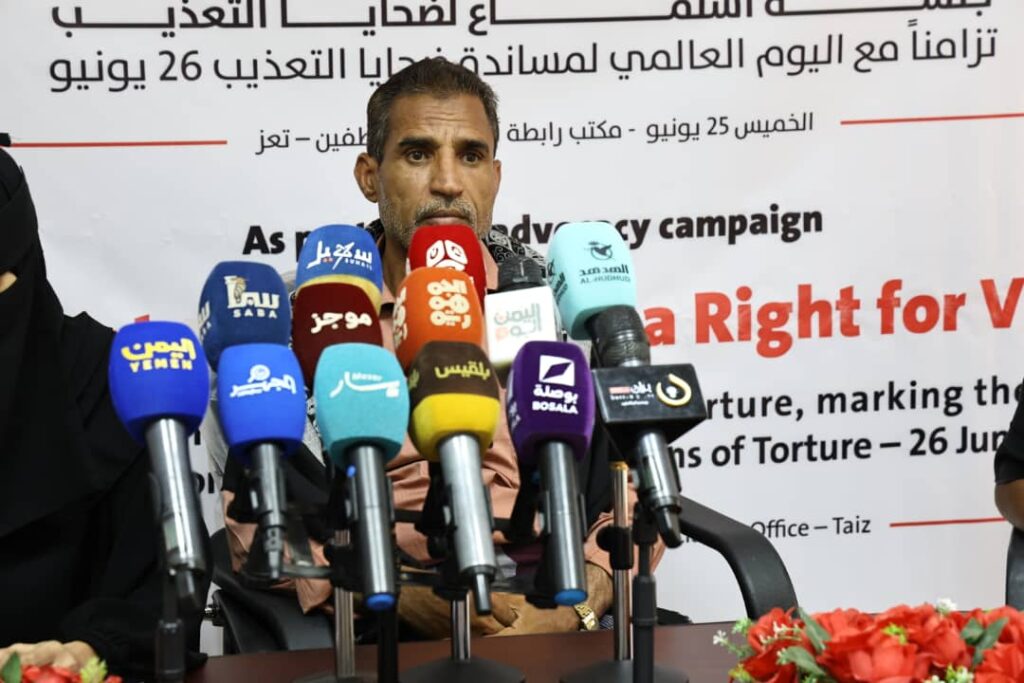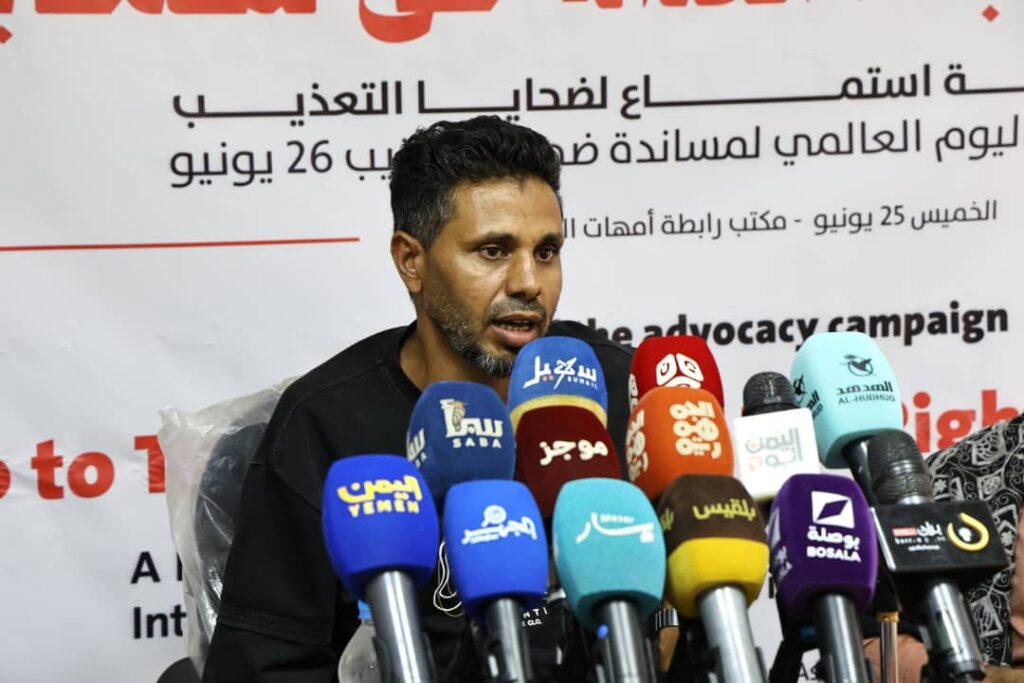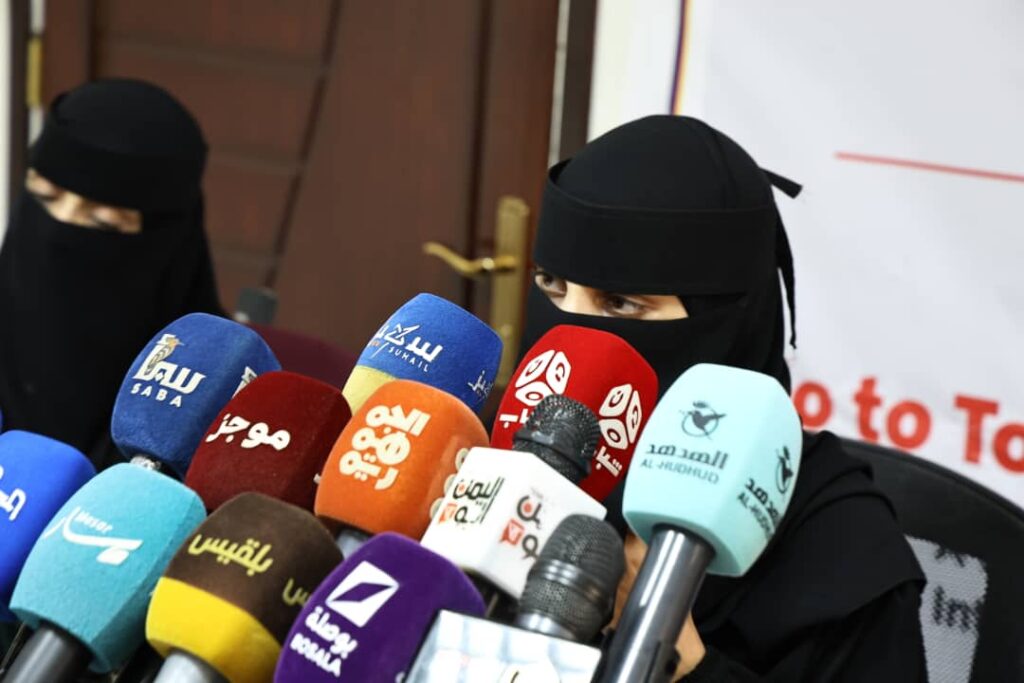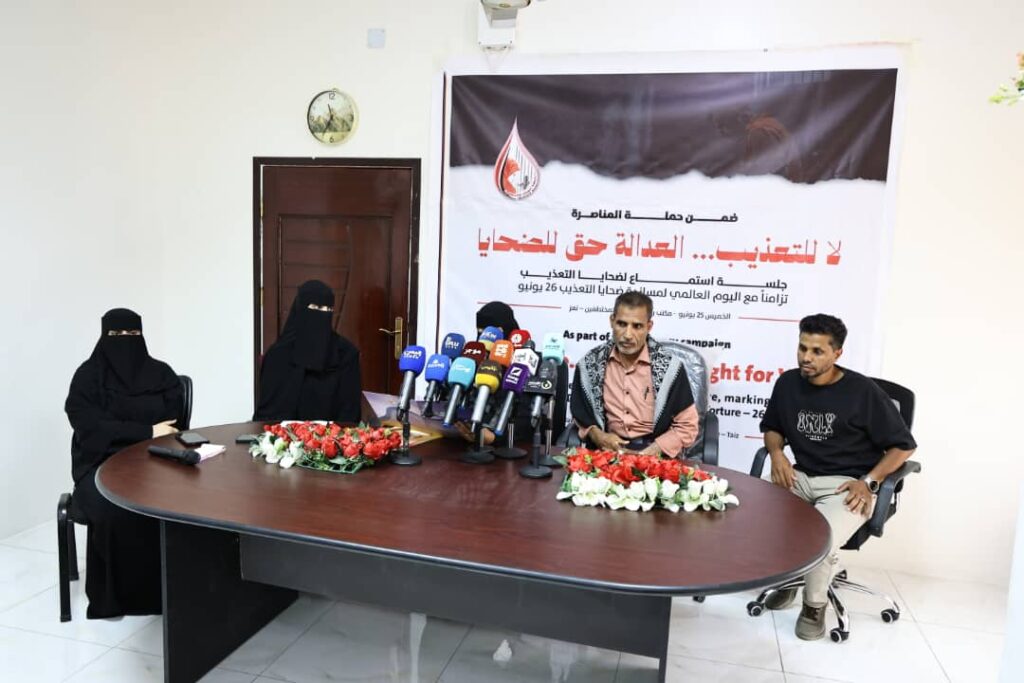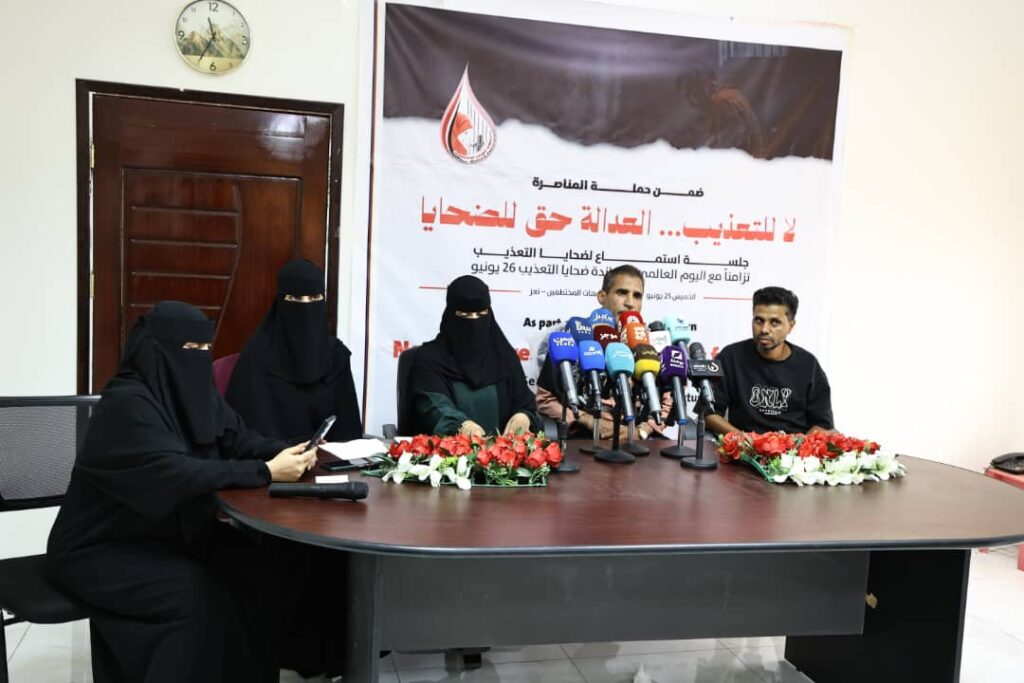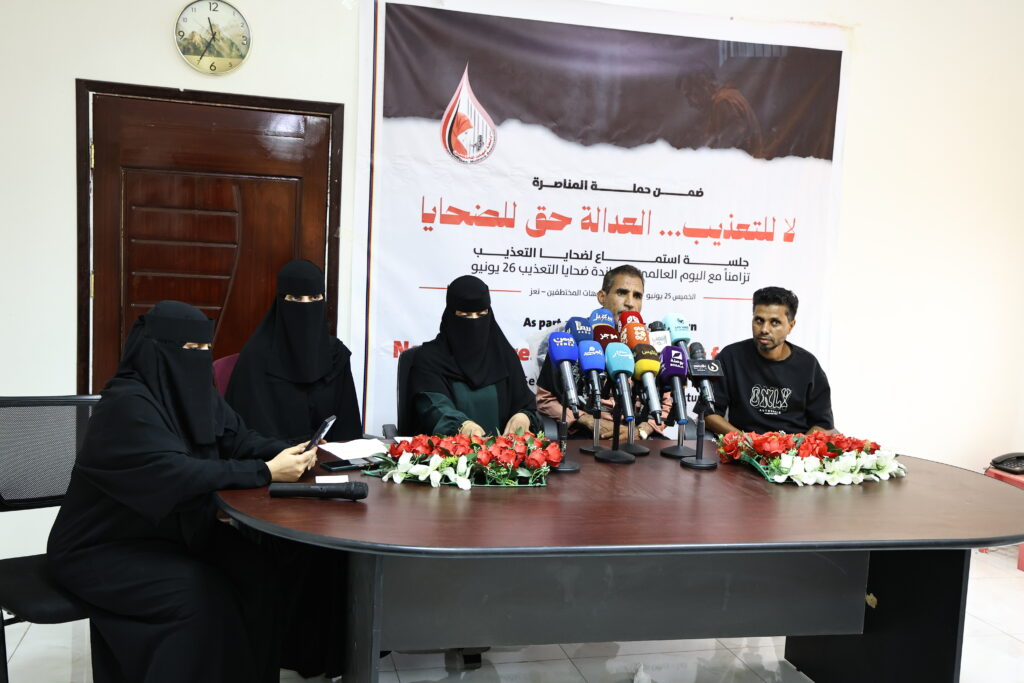
The Abductees’ Mothers Association held a hearing session ysterday in Taiz Governorate for a number of former detainees and survivors of arbitrary detention, marking the International Day in Support of Victims of Torture. The event was organized as part of the campaign “No to Torture… Justice Is a Right for Victims” and aimed to shed light on the reality of torture and abuses committed against abductees, forcibly disappeared persons, and detainees, while promoting efforts toward accountability and justice.
During the session, the Association presented the results of nearly a decade of work documenting torture violations. It reported documenting 1,332 cases of torture, including 88 deaths resulting from torture, committed by various parties, with the Houthi group responsible for the largest share of cases. The Association also showcased some of its key documentation reports, including The Odor of Death, Witnesses’ Memory, and When Death Becomes a Wish. In addition, it presented podcast episodes detailing cases of torture leading to death, as well as the film Death Cell, which features dramatized scenes depicting the harsh and systematic torture endured by abductee Masoud Al-Bakili and more than ten other victims.
The session included direct testimonies from survivors, revealing multiple forms of abuse inside detention facilities, including physical torture, medical neglect, ill-treatment, deprivation of basic rights, and harsh and inhumane detention conditions.
In his testimony, Mahmoud Dael Raweh explained that he sustained a physical injury at the moment of his abduction in December 2016 and was subsequently held for an extended period without receiving adequate medical care, causing his condition to worsen. He stated that the medical intervention he received inside the detention facility was primitive and cruel. According to Raweh, a doctor removed the stitches from his wound in an extremely painful manner and without sufficient anesthesia, pulling out not only the stitches but also part of the surrounding tissue, causing him severe suffering.
Raweh also recounted witnessing the torture of other detainees, including beatings carried out using various methods. He described the case of one detainee who was struck on the head with a bottle of extremely cold water, resulting in permanent partial paralysis.
He further described the detention conditions as exceptionally harsh, with large numbers of detainees confined in overcrowded spaces. He reported the use of collective punishment practices, the deliberate exposure of detainees to low temperatures, and the withholding of food or its use as a means of coercion and pressure.
For his part, Fuad Qaeed Ali shared his experience of enforced disappearance and detention in multiple locations after being abducted by both the Houthi group and Southern Transitional Council forces. He highlighted the severe restrictions imposed on daily life, including limited access to basic facilities and poor food quality. He stated that meals provided to detainees were at times spoiled and unfit for human consumption.
Ali also noted that detainees were held in unsafe locations and used as human shields in militarized areas, exposing them to direct danger during military operations. He added that some detention facilities were severely overcrowded and imposed heavy restrictions on detainees, further aggravating their physical and psychological suffering.
The Abductees’ Mothers Association emphasized that these testimonies reflect a recurring pattern of violations that it has documented over the years. The Association stressed that documenting such abuses is a fundamental step toward achieving transitional justice and ensuring accountability for those responsible.
At the conclusion of the session, the Association called on relevant authorities to take serious action to end these violations, strengthen accountability mechanisms, and ensure that perpetrators do not enjoy impunity. It reaffirmed its commitment to documenting abuses and amplifying the voices of victims despite the challenges involved.